
I wrote an article for Fathom Magazine about shame.
Author: Jason Kanz
I am a neuropsychologist at the Marshfield Clinic and author of Soil of the Divine (2017), Living in the Larger Story: The Christian Psychology of Larry Crabb (2019, editor), and Notes from the Upper Room: Lessons in Loving Like Jesus (2020).
Listen
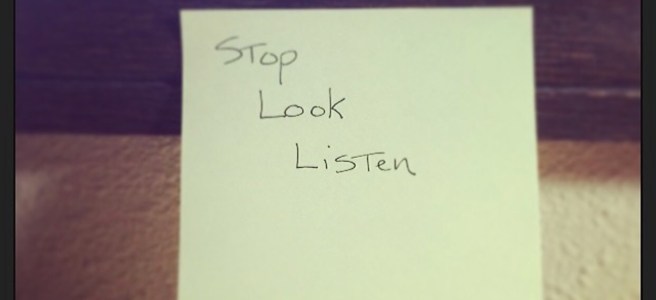
Write 31 days, day 13
Writing prompt: talk
I chewed on this word several times today, looking for something clever to say. All I kept coming to was this:
Let your words come to a stop.
Breathe in. Breathe out.
Then listen and keep listening.
Our world desperately needs our ears more than our mouths.
Reflection: sit in silence for ten minutes. Practice the spiritual discipline of not having to have the last word.
Prismatic Praise
Write 31 days, day 12
Writing prompt: praise
What does it look like to live a life of praise? Can we praise in sorrow as well as joy? In celebration and lament? I think about Job sometimes. He faced loss and suffering of mythic proportions. He laid his complaints before God. Did he ever stop praising?
Here’s the thing: I think that sometimes Christians get it in mind that a restricted emotional wavelength is preferable. Joy is welcome. Happiness, sure. Also contentment. We even allow sorrow–for a season, but then we expect it to give way to happiness. Do we believe that God is somehow incapable of handling prismatic emotions? The biblical record corrects us. We see men and women living lives of praise who deal with fear, anger, sadness, grief, and shame as well as joy. Perhaps when we bring all of these feelings before his throne, we truly offer robust praise.
For reflection: as often as you think of it today, ask yourself how am I praising God in this moment.
Heaven’s Door

Write 31 days, day 11
Today’s prompt: door
Can I be honest? I struggle with hell. I find myself asking how is it that God, who is not only capable of love, but is actually Love itself, could conscript people to hell? Especially those who have never heard. We find all sorts of ways to make sense of this: e.g., “well, God is completely holy.” That is absolutely true, but his holiness is not contrary to his love. None of us will fully understand the depths of his love or holiness this side of heaven. Part of me hopes that in the end, we will be greeted at the door by the Father, inviting us into wholeness, but only if we are willing to sacrifice our sinful ways, for darkness will not dwell with light.
For reflection: what doctrines do you wrestle with?
In the Little Things

Write 31 days, Day 10
Writing prompt: How
Each day, every one of us faces the question, “how will I choose to live today?” Some of us approach the question with intention, though most of us, I suspect, simply drift through our morning routines. Let me suggest, though, that even if we never have consciously considered this question, it still shapes us. We choose whether we will take a shower, surf the Internet, or greet our spouse with a kiss. We choose whether to walk with our shoulders back or staring at the ground. We choose whether or not we will think poorly of those who believe differently than we do.
For me, it has been beneficial to intentionally consider how to approach each day. Borrowing from Chuck DeGroat, I ask myself “how can I be an ambassador of shalom today?” or from my friend Curt Thompson: “am I living as an outpost of goodness and beauty?” I firmly believe that we can make the choice each day, indeed in each circumstance, to strive toward wholeness and peace or to degrade toward bitterness and division.
Last night, when I came home from work, I was irritable. Perhaps 20 minutes later, Heather asked me if I needed anything because I “seemed short.” She was right, and I told her so, but it was for no reason I recognized. It helped me to own that emotion and ask myself, “how does my attitude toward my wife, my son, and my dogs press toward shalom?”
None of us will get this perfect. We are all broken. Yet our imperfections do not disable our capacity to strive toward wholeness. I pray that more and more people will strive to embody truth, goodness, and beauty in their daily routines, and that those choices will push back a little bit of the darkness.
Reflection:
What daily rhythms help you to live toward wholeness? How can you stretch toward deeper wholeness this week?
Each Breath, Inspiration

Write 31 days, Day 9
Today’s prompt: Inspire
To inspire is
to breath life.
So often we wait
for something…anything
to energize us
to get creative juices flowing.
But are we paying
to the present
moment?
-To criss-crossed rakes, slumbering
beneath the blanket
quilted leaf by leaf.

-To a 9 year old
contemplating the rain or perhaps
multiplication’s complexity.

-To ducks
upon ponds and puddles
contemplating the rain or perhaps
multiplication’s complexity.

-To a benevolent Dane
enthroned upon
a burgundy dais
overseeing the play
of his loyal subjects.

Each whisper…each blink
a breath
an inspiration.
For reflection:
What inspires you in this moment?
Zion’s Comfort
Write 31 days, Day 8
Writing Prompt: Comfort
Day after day
I awaken to the pain
of disintegration,
citizens
hell-bent upon
being right,
which necessitates
someone
being wrong,
and not just wrong
–gloriously wrong–
indeed subhuman.
Our tongues
are uncoiled whips
whose razored tips
rip apart
human dignity.
The shining city on a hill
stands enveloped
in a cloud of dust and ash
that rises from its
crumbling foundations
and society’s conflagration.
Where then is our comfort?
Where is our hope?
Not with earthly powers
that govern the shining city
with inequity,
but with the LORD
of Mt. Zion,
which radiates with
the beauty
and goodness
and glory of God.
For the LORD comforts Zion;
he comforts all her waste places
and makes her wilderness like Eden,
her desert like the garden of the LORD;
joy and gladness will be found in her,
thanksgiving and the voice of song.
(Isaiah 51:3 ESV)
For reflection:
Reflect upon the goodness of God who is in the process of setting all things right.
Hopelessness

Write 31 days, day 7
Writing prompt: Hope
The gray clouds of depression first overshadowed my life several years ago. Though I could not give a precise date, I can tell you the circumstance that led to the realization that I needed some help. We were trying to sell our home and had some decisions to make. My wife asked what I wanted to do, and I just kept saying “I don’t know” and then I began to cry. She asked what was wrong, and I honestly could not tell her. She recognized something was amiss with me before I did. She asked if I was depressed, and I honestly wasn’t sure. I’m a psychologist, and I wasn’t sure. I knew I didn’t enjoy reading anymore. I felt numb. I had difficulty concentrating. But I wasn’t really sad, which is what people so commonly associate with depression. Believe it or not, sadness isn’t a requirement for depression.
In fact, what many people don’t realize is that depression can have nearly as many presentations as there are people who experience it. For some, sadness predominates and for others, a marked loss of interest. Some people sleep more and others sleep less. Some eat more and some eat less. Depression may include feelings of guilt, shame, punishment feelings, stomach aches, anxiety, headache, low energy, an unwillingness to get out of bed, a loss of interest in sex, not wanting to shower, feeling numb, or feeling disconnected just to name a few.
What does all of this have to do with today’s writing prompt, hope? Here’s the thing: depressed people may also feel hopeless and hopelessness is the greatest predictor of suicidal thinking. It seems that we can deal with sadness and we can deal with a loss of motivation, but when one truly perceive that there is no hope, what’s the point of going on? The horizon is all black and there is no sign of light. The future is all pain and there is no expectation of relief.
So often, well-meaning Christians desire to help. They say things like “well, have you prayed about it?” or “I’ll pray for you.” I have spoken with believers who view depression as a sign of sin because “Christians would never get depressed. They have too much to look forward to.” Any discussion of antidepressant medications is taboo because that is believed to be a sure sign of a lack of faith.
I have to ask, is the gospel that we are providing people truly a message of hope? If we fail to listen and hear someone’s deep pain, we are not. Not until we can sit with another person in his pain can we truly offer hope. Ezekiel 13:10 reads “Precisely because they have misled my people, saying ‘Peace,’ when there is no peace and because, when the people build a wall, they smear it with whitewash.” My friend Larry calls these people “wall whitewashers.” They tend to pretend everything is good and right when in truth, there is pain.
True compassion does not cover over another’s pain or pretend it does not exist. True compassion acknowledges the reality of the pain and hopelessness and sits with another in the midst of it.
For reflection:
What has been your experience with depression, either within yourself or with another? How have you made sense of it?

Ministry of Reconciliation
True Love’s Welcome

Write 31 Days, day 6
Today’s Prompt: Belong
Today, I wrote a brief reflection on the Trinity, inspired by the 15th century icon The Trinity by Andrei Rublev.
On a clear day, I saw them from a long way off. At first, I could barely make them out. From such a distance, I could not say whether there were three or one as they seemed to blend into one another. As I drew closer, they came into focus, the three seated around a small table. At first glance, I struggled to tell them apart; thankfully they each wore different robes.
Watching them kindled a longing I had never felt before. Intimacy flowed between them. There was no sense of posturing, no one-ups-man-ship. They genuinely delighted in being with one another. So often, with meetings of more than two, cliques begin to form. Two will buddy up tighter than the third. Not so here. They each reveled not only in the others, but even in the connection between the other two. I was seeing love embodied.
As I continued to gaze upon them from my safe distance, tears wet my cheeks. Never before had I witnessed something so beautiful. In that moment I beheld perfection. Oh, to be loved like that! To experience such divine intimacy. It touched upon every desire I had ever felt. Yet I remained outside, hidden.
I intended to sneak away quietly. To interrupt them would be to intrude upon perfection, and I was unwilling to disturb what they had with one another. As I raised up to leave, they looked my way. I expected irritation, but saw delight. I expected disappointment, but they exuded joy.
As one, they beckoned, “Come join us.”
“I couldn’t. I wouldn’t want to intrude,” but every part of me resisted my own words.
“We’ve been waiting for you. There is already a place at the table,” they said invitingly.
“But as I have watched you, I have witnessed perfection. I fear that if I join in, I will diminish perfection.”
“Friend, nothing you have ever done, thought, or said can diminish us. Rather, our love will envelop you. You belong. You have always belonged. You were created for no other purpose than to be in fellowship with us.”
And, hoping against hope, I took my seat and felt true love’s welcome.
 Jason Kanz